
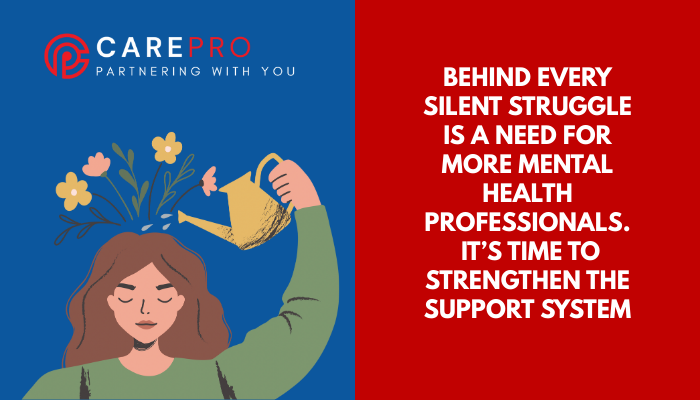
Mental health has become one of the most talked-about topics in today’s world, thanks to COVID-19. At least now people have begun to realise that something isn’t right within them and that it needs attention. While that attention can sometimes come from a family member or a friend, don’t you think the scar is often too deep for someone close to truly understand? And won’t we still feel fear or embarrassment when revealing our wounds to the people we live with the worry that they might judge us for the rest of our lives?
If anyone can save us, it is those who may or may not have felt the pain but understand it – the ones who can help us find both the cause and the cure. These are the people who have studied the wounds and scars living within us, understood them, and mastered them. They are the therapists, the psychiatrists, or even mental health advisors.
Demand for mental health services has surged – NHS data shows there were nearly 2 million people in contact with mental health services in September 2024, a 47.5% increase compared to pre-pandemic levels. Patients have been waiting for weeks or months to get themselves treated because of the never-ending waiting lists that just aggravates the trauma more and more.
Apply For Mental Health Jobs
The demand for mental health professionals has never been higher. As awareness around mental health grows, more people are seeking help, and the need for trained therapists, counselors, and psychiatrists is expanding rapidly. Yet, the gap between demand and availability remains a challenge, making the work of those who dedicate their lives to mental health more critical than ever.
This increasing demand is also reshaping how mental health support is delivered. Professionals are not only helping patients in traditional settings but also reaching people through online platforms, schools, and workplaces. Their role is evolving, requiring not just clinical expertise but empathy, adaptability, and the ability to connect with individuals who may feel hesitant or afraid to open up.
Despite efforts to expand the workforce, the UK’s mental health services still face a severe shortfall in both specialist and support roles. Recruitment is not keeping up: many posts ; from consultant psychiatrists to mental health nurses remain unfilled, putting enormous pressure on existing staff.
Without enough trained professionals, patients face longer waiting times, and some critical interventions get delayed or even cancelled, undermining the quality and safety of care.
On top of that, retention is a growing problem. The high turnover of staff, especially among newly qualified professionals, is stretching services thin. Many teams lack a balanced mix of experience, with too many junior clinicians and too few seasoned experts to guide complex cases. This not only affects patient outcomes, but also drives burnout, as existing staff pick up the slack leading to a vicious cycle that makes it harder to build a strong, sustainable mental health workforce.
Apply for Mental Health Jobs

You can subscribe to our Newsletter on LinkedIn or visit our CV-Library profile to find more job opportunities for Healthcare Workers across the UK by working with us at Carepro.